
 Disabled Artists Aotearoa
When I was growing up, it sometimes felt like I was the first disabled person on earth. I didn’t see people like me on TV, and I didn’t hear anything about myself in history class or on the news.
 Every life milestone – whether it was graduating from high school, moving to University, or leaving home – felt daunting and insurmountable, like I was the first astronaut to land on the moon. I felt unstuck from time, with no history or genealogy that would make sense of my experience.
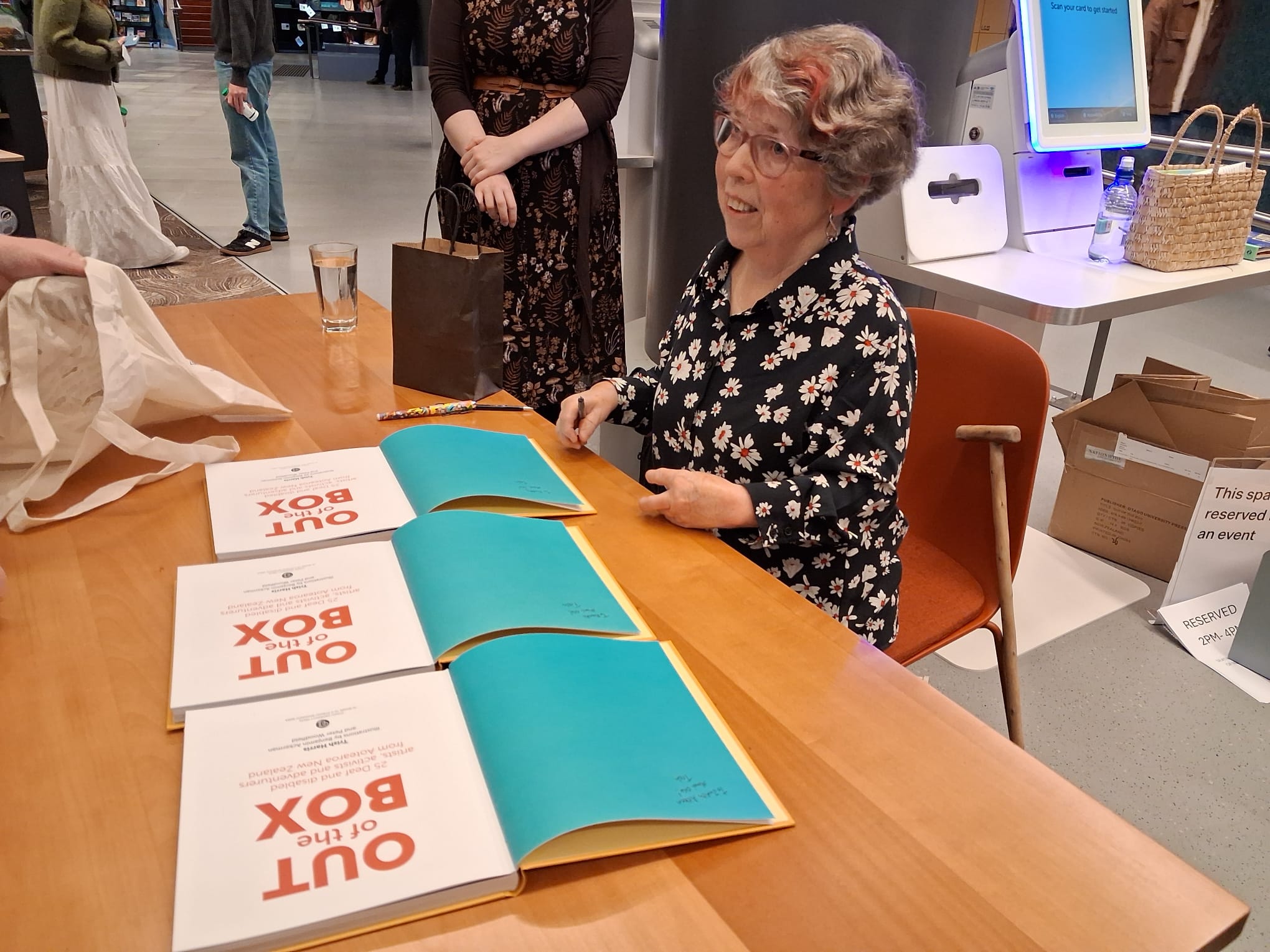
Trish Harris and her book, "Out of the Box - 25 Deaf and disabled artists, activists and adventurers from Aotearoa New Zealand", taught me, and the young girl I once was, of the rich disabled history of Aotearoa, and the many incredible role models, past and present, who don’t show us the way, but show us how to pave our own path.
Trish’s illustrated book for readers aged 12+ expertly and accessibly tells the stories of 25 Deaf and disabled activists, musicians, filmmakers, teachers, sports stars and law makers. While each story is as unique and diverse as their subjects, they all show how New Zealand’s history is shaped by Kiwis not only climbing mountains but also moving them.
New Zealanders moving mountains
Brando Yelavich, who struggled at conventional schooling due to his neurodiversity, turned his attention to the outdoors and he went on to be the first person to walk around New Zealand’s rugged coast.
Mojo Mathers, whose passion for the environment eventually led to changing New Zealand’s parliament and political landscape forever, making it more accessible for other disabled and Deaf New Zealanders.
Geneva Hakaraia-Tino, whose desire to hear te reo Māori honoured in her own voice, has led to the creation of Māori synthetic voices.
Barging through society's barriers
In each story, disability and impairment is not denied or “overcome” but it's not the centre of the story. Rather, Trish’s book tells the story of everyday New Zealanders who forged their own path, barging through the barriers society put in place for them.
As first demonstrated in her memoir “The Walking Stick Tree”, Trish once again demonstrates the importance of disabled people telling their own stories.
She deftly navigates the fine line between telling the stories of aspiring New Zealanders, without falling into the trap of boring disability inspiration. She doesn’t shy away from the real struggles Deaf and disabled people experience but there isn’t a hint of pity in her writing.
Recording disabled history for a young audience
There is also something truly humble in what Trish has achieved – herself a legend in the disability community, but who has turned her talents towards telling the stories of others. Recording disabled history in this way, for a young audience, is a selfless and important exercise.
Kids will love it too, with beautiful illustrations by Benjamin Ackerman and Peter Woodfield. This is a book that should be in schools all around the country, offering something to disabled and non-disabled children alike.
So, thank you Trish, for this beautiful gift to the community you love so dearly. I am glad that the next generation of disabled children will have books like this – recording disabled history and the heroes contained in its pages – to look to for guidance and strength.
Alice is a writer and member of Crip the Lit, contributing to its Verb Festival events over the past few years. She is also a disability activist and lawyer, and is passionate about challenging the barriers experienced by disabled people.